Uncategorized
Aurora Borealis: What Causes the Northern Lights
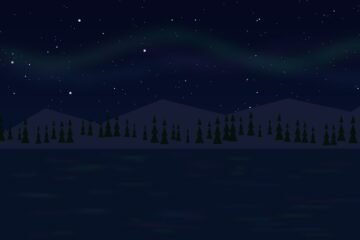
The aurora is caused by charged particles from the Sun — the solar wind — interacting with Earth’s magnetic field and atmosphere. When those particles collide with oxygen and nitrogen atoms at high altitude, they excite the atoms into emitting light. Oxygen at around 100 km altitude produces the most common green colour. At higher altitudes it produces red. Nitrogen produces blue and purple hues. The dance of colours depends on solar activity, atmospheric density, Read more
Uncategorized
The Scale of the Universe
Light from the Moon takes about 1.3 seconds to reach us. From the Sun, 8 minutes. From Proxima Centauri, our nearest stellar neighbour, over 4 years. From the Andromeda Galaxy — the farthest object visible to the naked eye — 2.5 million years. Every time you look at the night sky you are looking backwards in time. The photons hitting your retina left their source before you were born, before civilisation existed, before our species Read more
Uncategorized
Understanding Star Trails
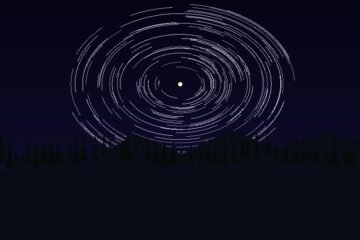
Star trail photography reveals the rotation of the Earth in a way nothing else quite does. Set your camera on a tripod, point it toward Polaris, and take a long exposure — or stack hundreds of shorter ones — and you will see perfect arcs tracing the night sky’s apparent motion. The closer to Polaris, the tighter the arc. Stars near the celestial equator trace the longest sweeping curves. The result is both a photograph Read more
Uncategorized
Planning Your First Overnight Trek
An overnight trek adds a dimension that a day walk simply cannot — the silence after other hikers have left, the way a mountain ridge looks under starlight, and the quiet satisfaction of waking where you camped. Start with a route you already know in daylight. Carry a paper map alongside your GPS device. Tell someone your planned route and expected return time. The mountain at night is the same mountain — you just have Read more
Uncategorized
Gazing at the Milky Way
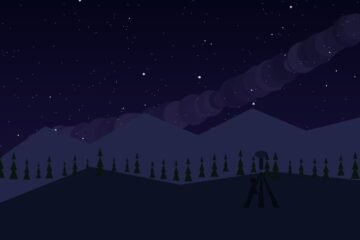
On a clear night far from city lights, the Milky Way stretches across the sky like a river of light. Every point of brightness is a star — most too distant to resolve individually, yet together forming a band that has guided navigators and inspired poets for millennia. Finding a dark-sky site is the first step. Apps like Light Pollution Map will show you the nearest areas with a Bortle class of 4 or lower Read more
Uncategorized
Hello world!
Welcome to WordPress. This is your first post. Edit or delete it, then start writing!